Guide

Roles

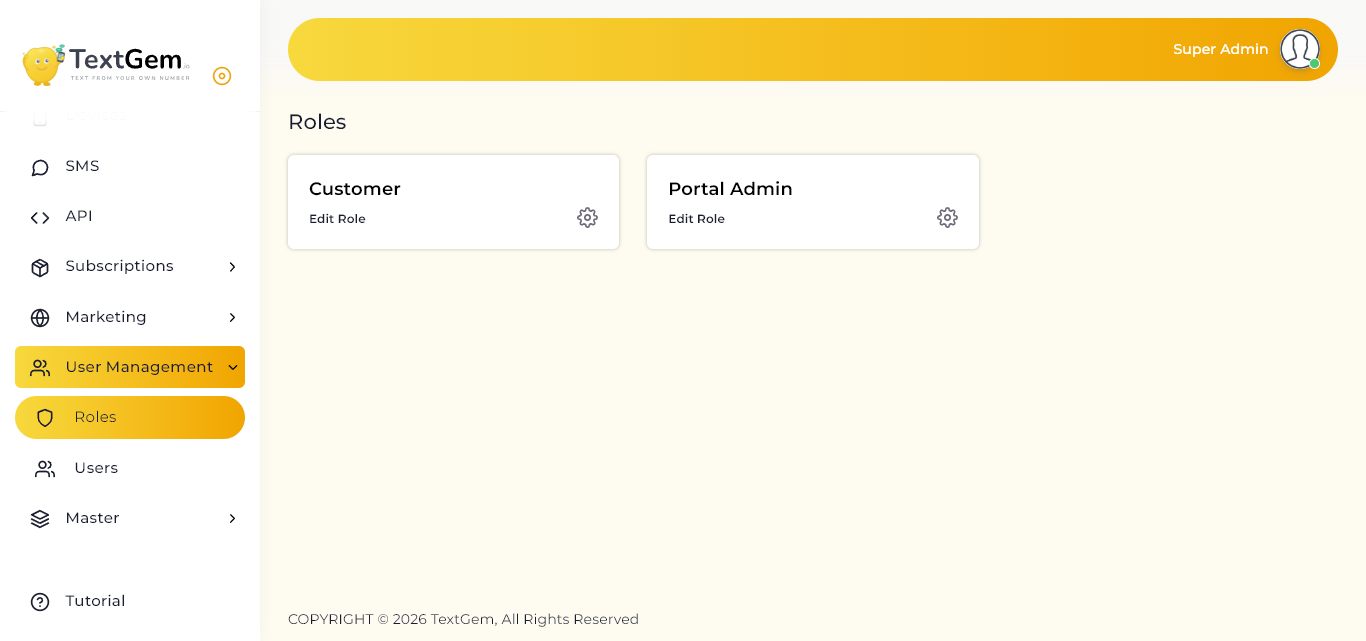
The Roles page allows administrators to view and manage access roles within the platform. Roles define what different types of users can access and what actions they are allowed to perform.

Roles Overview

Each role is assigned a set of permissions that controls access to platform features. This helps ensure that users only see and manage the sections relevant to their responsibilities.

The available roles are displayed as separate cards on the Roles page.

Available Roles

Customer

The Customer role is intended for users who access the platform for their own messaging, device, or account-related activities.

Customer permissions may include access to:

Their own profile and account details
Assigned devices
SMS activity and message history
Marketing contacts and campaigns, where enabled
Subscription-related information

Customers cannot access administrative settings or manage other users unless additional permissions are assigned.

Portal Admin

The Portal Admin role is intended for users responsible for managing portal-level operations.

Portal Admin permissions may include access to:

Customer account management
Device management
SMS monitoring and management
Marketing features
User management
Role and permission settings
Subscription and account administration

This role should only be assigned to trusted users who need administrative access.

Role Management Best Practices
Assign users only the access they need for their work.
Review role permissions regularly.
Limit administrative access to authorized users.
Avoid assigning Portal Admin access unless necessary.
Test permission changes before assigning the role to multiple users.

Module Permissions Overview

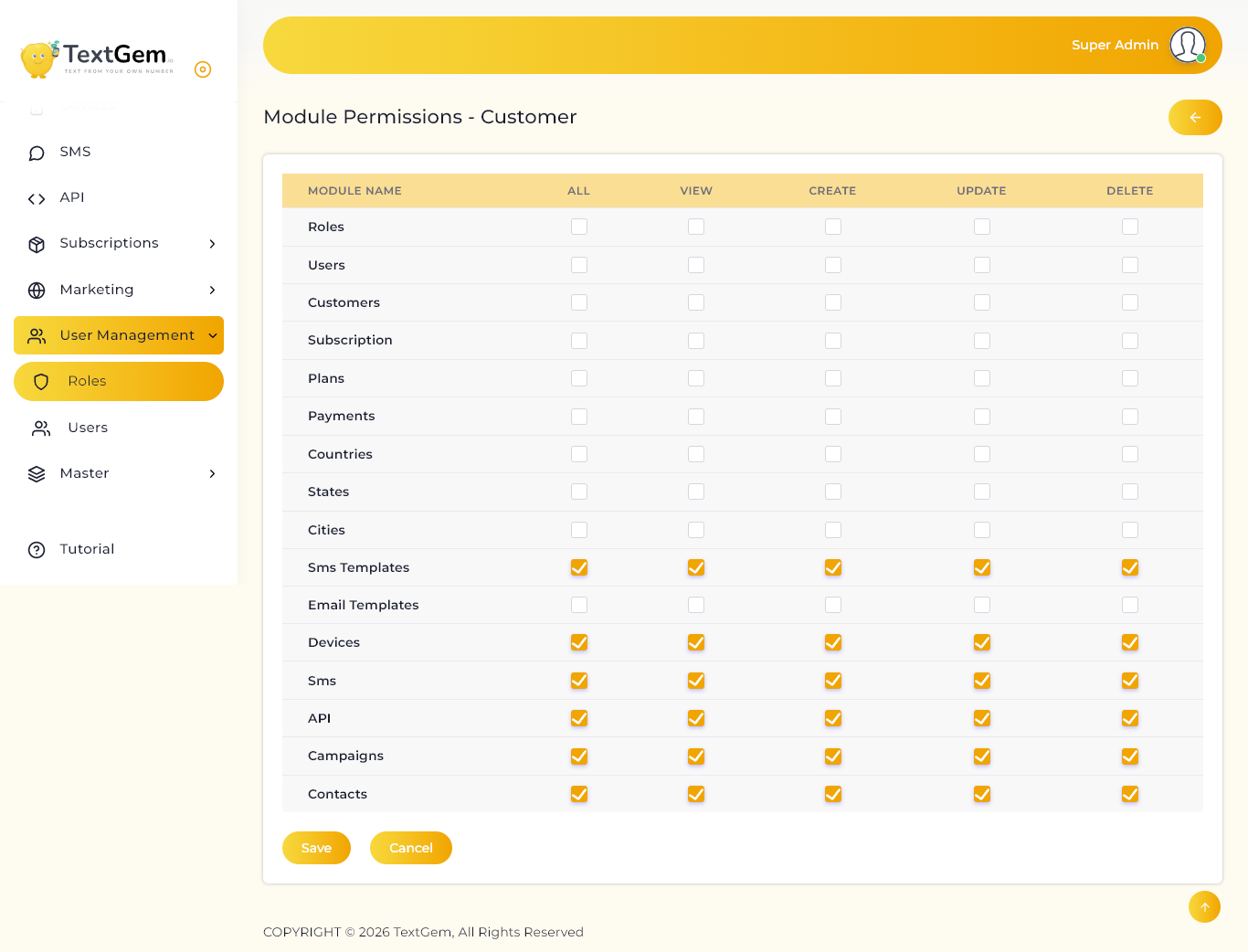
Permissions are managed module by module. For each module, you can allow the role to view, create, update, or delete records. You can also grant all available permissions for a module at once.

This helps ensure that users assigned to the role only have access to the features and actions required for their responsibilities.

Permission Columns

Each module includes the following permission options:

All — Grants all available permissions for the selected module.
View — Allows users to open and view records in the module.
Create — Allows users to add new records.
Update — Allows users to edit existing records.
Delete — Allows users to remove records.

Selecting All enables complete access for that module. Use individual permissions when more limited access is required.

Available Modules

Permissions can be configured for modules such as:

Roles
Users
Customers
Subscription
Plans
Payments
Countries
States
Cities
SMS Templates
Email Templates

Additional modules may appear depending on the platform configuration.

Updating Module Permissions

To update permissions for a role:

Open the required role from the Roles page.
Review the module list.
Select the required permission checkbox for each module.
Use All when the role needs complete access to a module.
Save the permission changes, if a save option is available below the permission list.

For example, if a customer should only view SMS templates, enable View for the SMS Templates module and leave Create, Update, and Delete unchecked.

Using the Back Button

Use the back arrow at the top-right of the page to return to the Roles page after reviewing or updating permissions.

Make sure any permission changes are saved before leaving the page.

Permission Management Best Practices

Give roles only the permissions required for their tasks.
Avoid granting Delete permission unless it is necessary.
Use View-only access for users who only need to review information.
Review role permissions regularly as responsibilities change.
Test permissions using a user assigned to the role after making updates.

Overview

Permissions are displayed in a module-wise table. Each row represents a platform module, while each column represents an action that can be allowed for the Portal Admin role.

In the current configuration, the Portal Admin role has full permissions enabled for the listed modules.

Permission Types

The following permissions can be assigned to each module:

All — Grants complete access to the module.
View — Allows the user to view module records and information.
Create — Allows the user to add new records.
Update — Allows the user to edit existing records.
Delete — Allows the user to remove records.

When all permission checkboxes are selected, the Portal Admin role can fully manage that module.

Modules with Portal Admin Access

The Portal Admin role can be configured to manage modules such as:

Roles
Users
Customers
Subscription
Plans
Payments
Countries
States
Cities
SMS Templates
Email Templates

The available module list may vary depending on the platform configuration.

Updating Portal Admin Permissions

To modify permissions for the Portal Admin role:

Open the Portal Admin role from the Roles page.
Review the permissions available for each module.
Select or clear the required checkboxes.
Use the All option to enable complete access for a module.
Save the changes, if a save option is available below the permission list.

For example, if Portal Admin users should manage users but should not delete them, enable View, Create, and Update for the Users module while leaving Delete unchecked.

Returning to Roles

Use the back arrow at the top-right of the page to return to the Roles page.
Ensure that permission changes are saved before leaving the page.

Best Practices

Grant full access only to trusted administrative users.
Limit Delete permissions where permanent record removal is not required.
Review Portal Admin permissions regularly.
Keep access aligned with administrative responsibilities.
Test updated permissions with a Portal Admin account before applying them across the organization.